
What Does an Ecommerce Website Cost in Australia?
Real price ranges for an online store in Australia, what pushes the cost up, and how Shopify, WooCommerce and custom builds compare. A no-hype ecommerce budgeting guide.
The short version
- An online store costs more than a brochure site because it does more — payments, products, checkout and the systems behind them.
- A solid small-store build usually starts higher than a standard website and climbs with product count, custom features and integrations.
- Platform matters: Shopify has predictable monthly fees; WooCommerce is more flexible but you manage more; custom costs most.
- Budget for the running costs too — platform fees, transaction fees, apps and maintenance — not just the build.
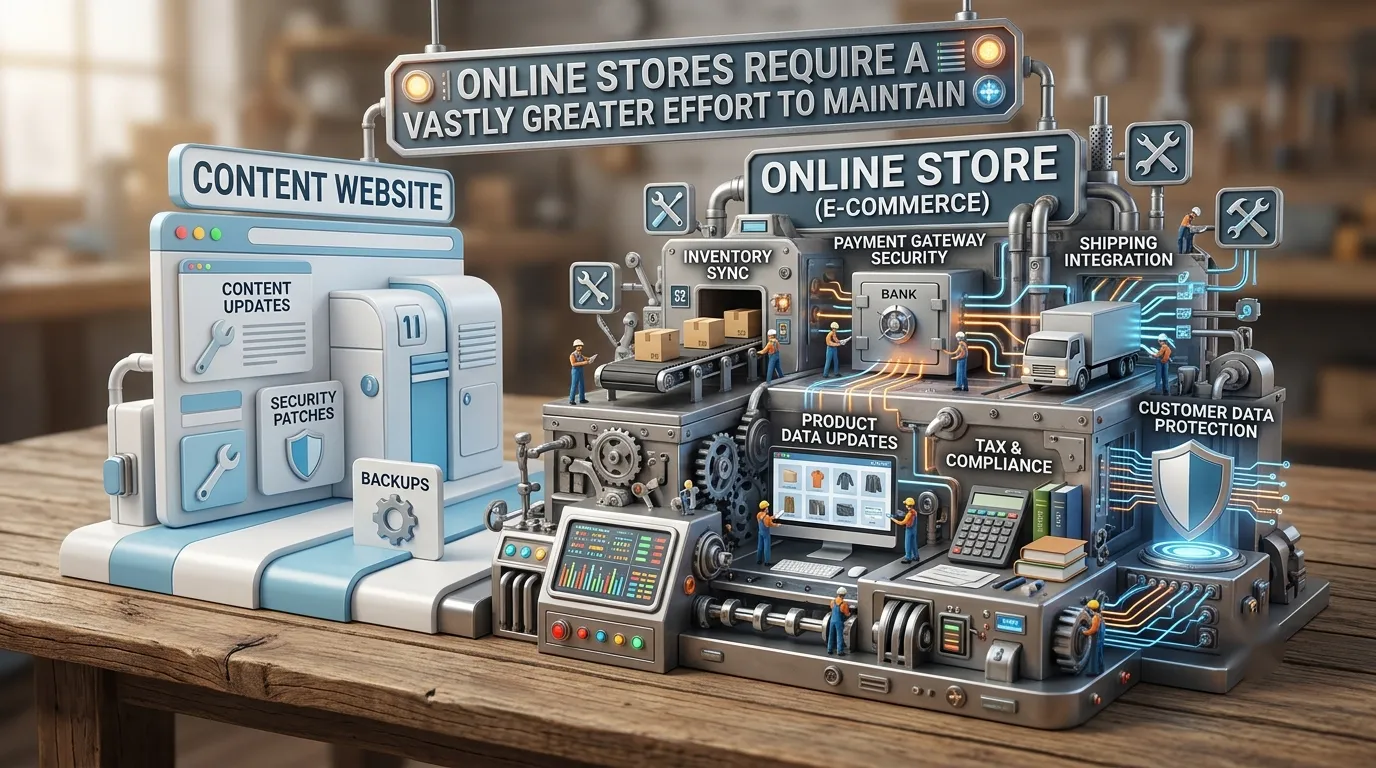
An online store and a normal website are different beasts, and their prices show it. A brochure site presents your business; a store has to take money, manage products, handle shipping and stay secure while it does. That extra machinery is what you’re paying for.
So let’s talk real ranges for an ecommerce website in Australia, what drives the number, and the running costs people forget to budget for.
How much does an ecommerce website cost in Australia?
A professional online store in Australia usually starts higher than a standard website and climbs from there. A small, clean Shopify store with proper setup sits at the lower end. A large catalogue, custom features or integrations push it up. We don’t publish fixed prices, because an honest quote depends on what you’re selling and what the store has to do — but “more than a brochure site, and it depends” is the truthful shape of it.
If you want the general website ranges for comparison, our website cost guide lays those out.
Why does a store cost more than a brochure site?
Because there’s a whole layer of work underneath the design that a brochure site never needs:
- Product setup — every item, with images, descriptions, variants, prices and stock
- Secure checkout — the payment flow, tested and trustworthy
- Payments and shipping — gateways, rates, zones, and tax settings
- Integrations — email, accounting, inventory or fulfilment tools
- Ecommerce SEO — product data structured so people (and AI) can find your products
A ten-page brochure site and a ten-product store are not the same job, even though they sound similar.
What drives the price up or down
Five things move an ecommerce quote more than anything:
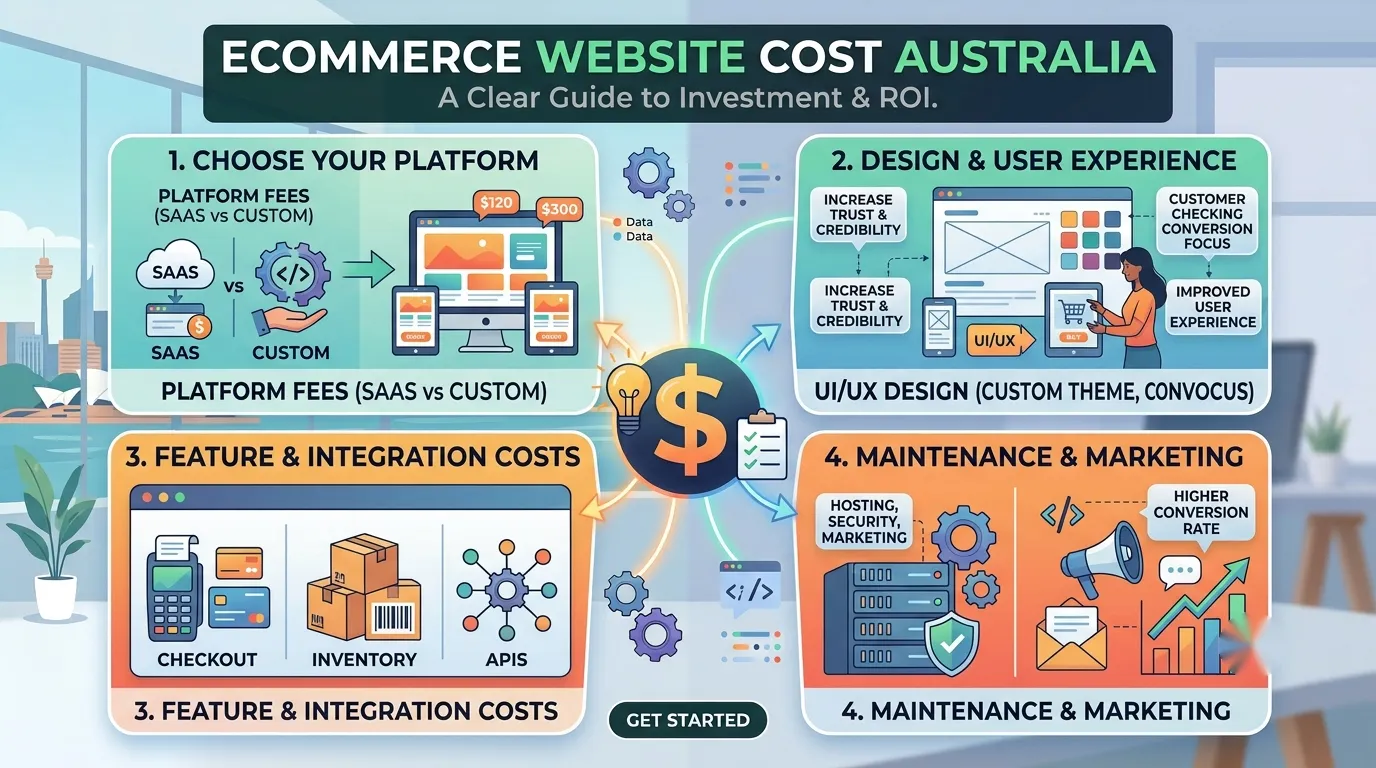
- Number of products. Ten products is quick. A thousand, with variants, is a serious setup job.
- Design — template or custom. A well-chosen theme is affordable; a fully custom, brand-led store costs more.
- Custom features. Subscriptions, bookings, member pricing, or a bespoke tool. For TxTPrint we built an on-site design app so customers create artwork and order instantly — powerful, and a real build.
- Content. Who writes the product descriptions and shoots the photos. Good product content sells; it also takes time.
- Integrations. Each system you connect (inventory, accounting, fulfilment) adds work.
Platform: Shopify vs WooCommerce vs custom
The platform shapes both the build and the running costs.
| Shopify | WooCommerce | Custom build | |
|---|---|---|---|
| Build cost | $$ | $$ | $$$$ |
| Ongoing | Monthly plan + fees | Hosting + plugins | Hosting + upkeep |
| Best for | Most small–mid stores | Content-heavy or flexible needs | Unusual, large or unique models |
| You manage | Least | More (updates, hosting) | Most, or your team does |
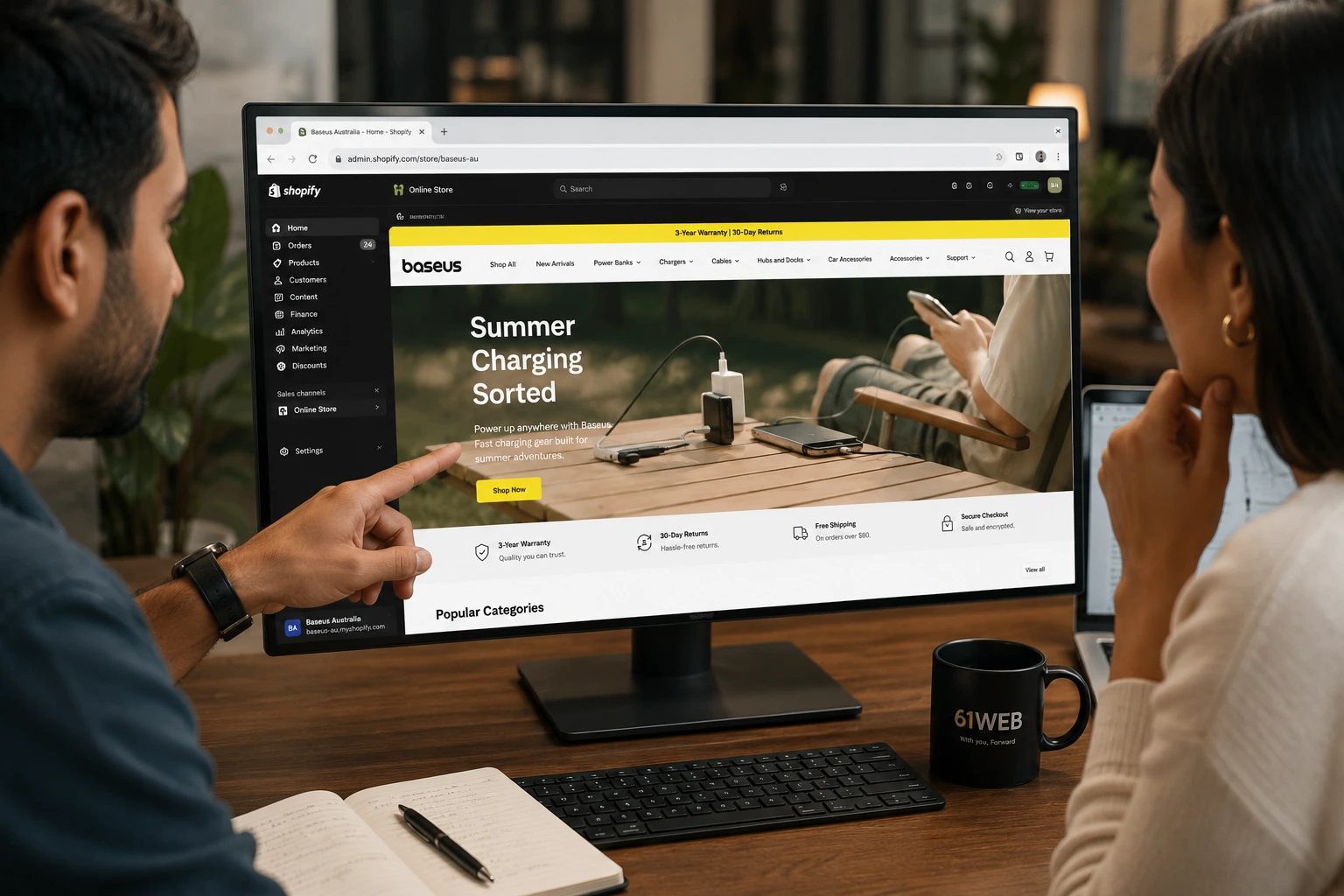
For most Australian small businesses, Shopify is the sensible default: predictable monthly pricing and less to look after. We built OleOle and AWESIZE on Shopify for exactly that reason. WooCommerce suits stores that want more control or sit inside a content-heavy WordPress site — it’s what we used for Islamic Travel’s custom booking flow. If you’re torn, our Shopify vs WooCommerce comparison goes deeper.
Don’t forget the running costs
The build is the start, not the whole bill. Budget for:
- Platform or hosting — Shopify’s monthly plan, or hosting for WooCommerce
- Transaction fees — a small percentage on each sale via your payment provider
- Apps and plugins — extras for reviews, shipping, email and so on
- Maintenance — keeping the store fast, secure and updated, which matters even more for a store than a brochure site
These are the cost of owning a store that keeps working. Ignore them at the quote stage and launch day comes with surprises.
Getting a real number for your store
The only accurate price is a proper quote based on your products, your features and your platform. Be clear on what you sell, how many products, and any must-have functions, and a good agency will scope it honestly, and tell you if a simpler build would serve you just as well.
If you’d like a straight figure for your store, tell us what you’re planning to sell. We’ll recommend the right platform, a fair scope, and a fixed price with no surprises — the way we’ve done for every store we’ve built.
Frequently asked questions
How much does an ecommerce website cost in Australia?
A professional online store typically starts higher than a standard brochure website and climbs from there. A small Shopify store with a clean design and proper setup sits at the lower end; a large catalogue, custom features or integrations cost more. The build price depends on how many products you sell and what the store has to do.
Why does an online store cost more than a normal website?
Because it does more. On top of design, an ecommerce site needs product setup, a secure checkout, payment and shipping configuration, tax settings, and often app integrations. Each of those adds work, so a store is a bigger build than a brochure site of the same page count.
What are the ongoing costs of an ecommerce website?
Expect a platform fee (Shopify's monthly plan, or hosting for WooCommerce), payment transaction fees, any paid apps or plugins, and ongoing maintenance. These running costs are part of owning a store, so budget for them alongside the build, not just the upfront price.
Is Shopify or WooCommerce cheaper for an online store?
Shopify has predictable monthly fees and less to manage, which suits most small businesses. WooCommerce has no platform fee but you pay for hosting and manage more yourself, and complexity can add cost. Neither is reliably cheaper — the right choice depends on your products and how hands-on you want to be.
Sources
Want a hand with this?
We do exactly this. Take a look at Ecommerce Websites, or start with a free check.