What Makes a Good Website? 7 Things That Matter Most
What actually makes a good website — the seven things that decide whether visitors trust you and enquire, or leave. A practical checklist for Australian businesses.
The short version
- A good website is fast, clear, easy to use on a phone, and points every visitor toward one obvious next step.
- Looks matter, but they come after clarity. A gorgeous site nobody understands still loses the enquiry.
- Most visitors decide whether to stay in the first few seconds — your headline and load speed do more work than any animation.
- The best test isn't 'is it pretty?' It's 'can a stranger work out what you do and how to act in under ten seconds?'
Everyone knows a bad website when they hit one: slow, confusing, impossible on a phone. A good one is harder to pin down, because when it works well you barely notice it. You just find what you need and act.
So let’s make it concrete. Here are the seven things that actually separate a good website from a forgettable one, in the order that matters.
What makes a good website?
A good website is fast, clear, easy to use on a phone, and points every visitor toward one obvious next step. It looks professional, earns trust, and answers the questions a real customer has. Design matters, but it sits on top of those basics, not instead of them.
Nail the seven below and you have a site that works. Miss the first few and no amount of styling saves it.
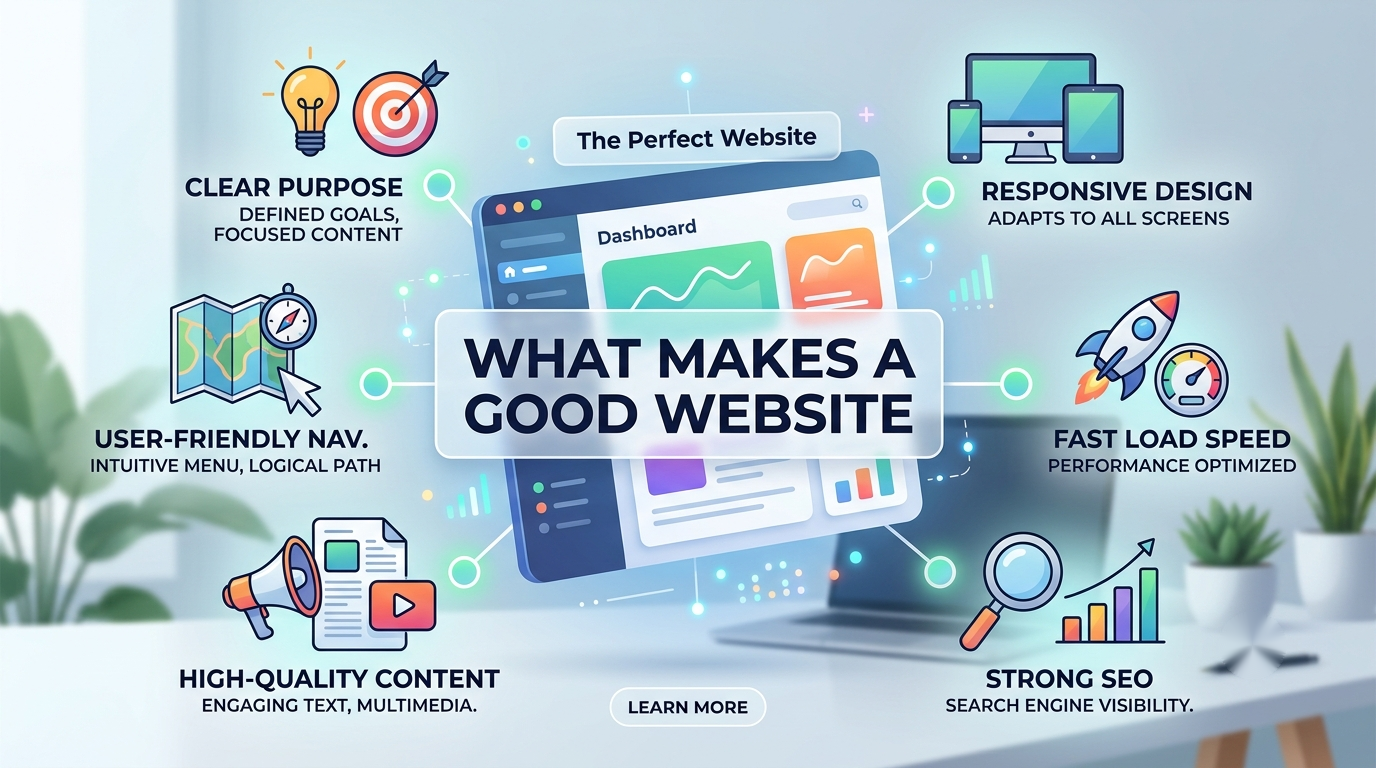
1. It loads fast
Speed is the foundation. Visitors decide in seconds whether to stay, and a slow site burns that time before your message even appears. Google measures this too — its Core Web Vitals score sites on loading speed and stability, and slow pages get held back in search.
Fast isn’t a nice-to-have. It’s the price of entry. If your site is sluggish, it’s costing you enquiries you’ll never know about.
2. It’s clear in the first few seconds
Within roughly three seconds, a visitor should know what you do, who it’s for, and that they’re in the right place. This is the “3-second rule,” and it lives or dies on your headline. Research from the Nielsen Norman Group found people leave pages within the first 10–20 seconds unless something holds them.
Clever taglines lose to clear ones. “Speech therapy for kids in Castle Hill” beats “Unlocking potential, together” every time.
3. It works on a phone
Most of your visitors are on a phone. If the site is fiddly, slow or broken on mobile, most of your audience gets your worst version. A good website is built mobile-first: easy to tap, quick to load, and readable without pinching and zooming.
4. It guides people to one clear action
Every page should have an obvious next step: book, call, enquire, buy. A good website makes that step easy to find and hard to miss. A confusing site offers ten things and gets none of them done.
When we built OleOle, a premium baby-products store, the whole design pushed toward one thing: a clean, trustworthy path from browsing to checkout. That focus is what turns a visitor into a customer.
5. It builds trust
People buy from businesses they trust, and a website signals trust in seconds:
- Real photos, not just stock
- Reviews and testimonials
- Clear contact details and a real address
- A professional, current design (not one that looks abandoned)
- Straightforward, honest copy
Miss these and even a good-looking site feels risky. Nail them and a modest site feels safe to deal with.
6. It answers real questions
A good website answers what customers actually ask before they enquire: what you do, what it costs (or how pricing works), where you are, how to start. Sites that dodge these make people work, and many won’t. Answering them plainly also helps you get found — both in Google and in AI answers, which pull from clear, direct content.
7. It looks the part
Design comes last on this list on purpose, not because it doesn’t matter, but because it only works once the basics are in place. A professional look earns instant credibility and makes your business feel like the real deal. It should match your brand and your customers, not chase trends. For Castle Hill Speech & OT, that meant warm and welcoming for families, not slick and corporate.
The simplest test for a good website
Forget “is it pretty?” Ask this: can a stranger tell what you do, why it’s for them, and how to take the next step, in under ten seconds?
Show your site to someone outside your business and watch them. Where do they hesitate? What do they miss? That confusion is your to-do list.
If your current site fails that test, it’s probably time for a rethink — here are the signs a website needs a redesign. And if you’d like an honest second opinion on where yours stands, our team can take a look and tell you straight what’s working and what’s holding it back.
Frequently asked questions
What makes a good website?
A good website loads fast, works on a phone, makes it obvious what you do within seconds, and guides visitors toward one clear action like booking or enquiring. Design and trust signals support that — but speed, clarity and a clear next step matter most.
What is the 3-second rule in web design?
It's the idea that visitors decide within roughly three seconds whether your site is worth their time. If your page is slow to load or your headline doesn't say what you do, most people leave before they read anything else.
How do I know if my website is any good?
Show it to someone who doesn't know your business. If they can't tell what you do and what to do next within about ten seconds, the site isn't working — no matter how good it looks to you.
Does a good website really affect sales?
Yes. A fast, clear site that builds trust and makes the next step obvious turns more visitors into enquiries and sales. A slow or confusing one quietly loses them, and you never see the customers you missed.
Sources
Want a hand with this?
We do exactly this. Take a look at Web Design, or start with a free check.